Just as she was in life, Deliverance was a demon in death.
Her cruel whispers invaded quiet conversations. Her hate-filled face raced past in the shadows. Destroying the body didn’t end her baneful abuses. Instead, she became limitless and everywhere, always.
A thick breath of fog rolled in from Derby Wharf, obscuring much of the town in its salty grip. Beneath a brick wall, Angela’s torso hovered close to the ground like a disembodied specter. It was just past the witching hour.
Trying to ignore the demon’s voice, her foot forced a shovel tip between the invading roots of an old elm tree. Late summer rain softened the first two feet, but the deeper she went, the more arduous her task became. As its blade struck the cold earth, the shovel’s handle creaked once more. If it could just hold out a bit longer, weeks of their nocturnal labor would come to an end tonight.
The whispers beneath her feet intensified into a full-throated growl. Too loud. Angela pulled a small bottle of water out of her pocket and sprinkled it over the soil. Its bitter blessing drove the sound into silence once more.
For years, drugs numbed the whispers and obscured the demon’s face, but Angela’s gatekeepers eventually tossed her out like many crumpled bits of garbage now littering the streets of the North Shore. In Boston, she found ways to calm the chaos by coercing the gullible. Many survived their interactions with her. Some were not as fortunate.
During a moment of weakness, she tried to end her own life, but Lyssa and Hekate kept her from the slumber of death. Instead, her beloved Goddesses graciously bestowed visions of destiny upon their troubled servant.
The shovel finally bumped against something other than rocks and roots. A rush of excitement flowed through Angela’s veins. Turning the blade over, she scraped back the earth from the old pine lid. Then she jammed the shovel’s metal edge between the boards.
Nails loosened, but the pressure snapped the rusted collar from the shovel’s wooden handle. She grumbled something incoherent and tossed the broken tool aside. It landed with a soft thud onto the foraged slab of plywood she’d been using to cover the grave.
Adrenaline in her veins shifted to pulsing dopamine.
Angela grabbed the axe lying next to the rejected shovel. She lifted it above her head and let its blade fall onto the rotting timber. Not too hard. Just enough to break it. Must not harm the treasure inside. She set the axe aside and grabbed hold of the broken coffin lid. When one of the planks snapped in half, it ripped open the skin on her knuckles.
A face stared back at her. Though not recognizable in its present state, it still gave Angela nauseating chills. Crimson drops christened the bones as she placed them one by one inside a black trash bag. It wasn’t the first time the demon drew blood from her.
When she was done, she pulled the plywood back over the open pit and spread a thin layer of earth on top with the shovel blade. Once more, her work was hidden. Then she picked up the axe and swung it hard against the cheap concrete headstone. It tumbled over into the tall weeds. She struck it several times more, letting fury flood her soul.
Angela rolled over in the darkness and opened her eyes in a panic. Did she just come from the cemetery, or was it something she had yet to do?
No.
She reached over and touched the black bag lying next to her. It had been days since that task had been completed. Time slipped back and forth so easily sometimes.
Obtaining the bones was one step. Soon, Angela would bend the demon to her will with the threat of silencing it forever. Remnants of the forbidden ritual remained engraved in her mind. The rest, the part she wasn’t allowed to read, was in a Book of Shadows hidden somewhere in this house.


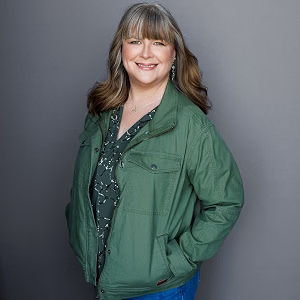
The Book Junkie Reads . . . Interview with . . . S.A. Sizemore . . .
How would you describe your style of writing to someone that has never read your work?
In terms of how I create a story, I’m very much what I call and hourglass writer. I spend a great deal of time researching my plot ideas and characters while I create an outline. That might take months or years. Once I’m ready, I crank out the first draft within a month or two. Then I spend a great deal of time rewriting, editing, and polishing.
Regarding the writing itself, I write in the 3rd person and jump back and forth between the characters’ prospectives. One moment you are seeing what’s happening through my protagonist’s eyes, then a couple of paragraphs later you are seeing the same thing through a different character, perhaps even the villain. Those shifting perspectives give the reader a constantly shifting view of what’s going on. It can also build great tension when you see two people struggling to communicate with one another, hiding secrets, or manipulating one another.
I often don’t like telling a completely linear story. Time will become quite fluid as we go further along in this book series.
My background is in script writing, so my ability to propel a story through dialogue is strong. I love writing the way people actually talk. We stop and start, change subjects suddenly, and talk over one another.
Do you feel that writing is an ingrained process or just something that flows naturally for you?
My mother claimed that I wrote my first play when I was six years old. I think that might be a bit far-fetched, but I have been a script writer my whole life up until now.
Writing is kind of a compulsion for me. I get high off it. There’s definitely a process I’ve developed over the years and when I jumped to novel writing, that process became very important. Writing a script is like doing a Cross Fit competition, but writing a novel is like running a marathon. Both take discipline and preparation. I think writing a novel, for me, requires a lot of prep work. Once I do that prep, then the writing just flows.
Do you take your character prep to heart? Do you nurture the growth of each character all the way through to the page?
I think my main characters develop organically when I first start thinking about a plot. Then as I outline it further, other characters pop in. Once I kind of have a general idea of who each one is, then I start visualizing them more.
I use Trello to organize my thoughts, and one of my lists contains just characters. I’ll find an actor who I think looks like my character and throw a photo of them into that character’s card. Then I write down adjectives to describe them and fill in their history. From that I will often create an illustrated character sketch using the paint tools in Photoshop. You can find the Beckett Coven sketches on my website.
It’s also important to assign each of them a secret. What are they hiding from other people and what are they hiding from themselves? For a series, I think that should change a bit for each book. Maybe they shared a secret already, but a change in events, created a new secret. Or maybe they never resolved a secret within themselves. Or they are worried about a secret someone else may be hiding.
Do you people watch to help with character(s) development? Or do you build upon your characters during story creation?
I think as a writer we should always be looking at everyone around us. Not copying them as a character but taking little bits of them and storing it for later. Character creation can be weird sometimes. I think almost every writer talks about their characters taking control at times. Sometimes I feel like they are telling me what to do as opposed to me making them do things.
One of my characters for the Beckett Coven series was originally written as a white woman, but as I developed her further, Finlay Williams made it very clear that she wanted to be a Black woman from Savannah and a former Wiccan High Priestess. And I was not about to argue with her.
Some of the characters I created for this series are my actual ancestors. My tenth great-grandparents, John and Mary Ingersoll, are a great example. I originally wrote their marriage as being strained and unhappy. They let me know in no uncertain terms that I was getting that wrong. An unexpected article I found made me realize that theirs was probably a strong and happy relationship. A lot of effort was taken to make sure that Puritan couples were a good match for one another. They typically didn’t marry until they were in their mid-twenties. Men had to establish themselves and build (or inherit) their own home before they could find a life partner. Once the couple decided to consider marriage, the young man actually spent the night with the young woman. A board was placed between them in the bed. Parents kept a bit of a watchful eye, but the whole point was to give the couple privacy so they could talk and make sure they were a good fit. It totally reshaped my view of Puritan households and marriages. So, I took the hint and rewrote them. John and Mary are so much more interesting now. Their relationship is complex. They perform a complicated dance of compromises, even in difficult moments, as opposed to the flat and angry biases I had initially thrown at them.
Have you found yourself bonding with any particular character(s)? If so, which one(s)?
Oh my gosh, that’s a hard question. I feel like I’m so bonded with all of them now after spending three books with them. But I’m probably most bonded with my ancestors and Bridget Bishop. Bridget was the first woman executed during the Salem Witch Trials. She was innocent of the charges against her, as were the other accused persons. Most likely she was the victim of a judge who simply didn’t like her.
Bridget is the soul of this book series, and it has been very important that I breathe life into her story. I feel so often she and the others get reduced to being a name on a memorial. Bridget’s story gets frozen in time at the worst moment of her life. The written testimonies during her trial are just a bunch of tall tales and nasty rumors about her. I wanted to find the real Bridget behind all of that because I know she was so much more.
From her questioning on April 19th, 1692, the only time we get to hear her voice, you can tell she was probably very smart, charming, and witty. She liked to bargain, which wasn’t very socially acceptable among the Puritans. She also didn’t suffer fools lightly. If you were talking behind her back she would walk right up to you and confront you about it. When her second husband beat her, she beat him right back.
Bridget was a bit of a fashionista, too. She liked wearing expensive fabrics and would add bits of colored cloth to make them even more interesting. Again, not something the Puritans found endearing.
I think it’s hard for me not to sympathize with Bridget, since I’m certain if I was in Salem in 1692 I probably would have been targeted as well.
Can you share your next creative project(s)? If yes, can you give a few details? Right now, I’m all in on the Beckett Coven series. The first book Whispers of the Pale Witch comes out this September. The second book Lies of the Bishop Stone comes out in 2027. I just got the synopsis of the third book to my publisher, so we will announce its title and publishing date very soon. The series will complete after the third book, but I may find some ways to tell spin-off stories. Other than that, I’d like to work on a speculative historical fiction focusing on my Ingersoll ancestors, but without the fictional witchy stuff. I think it would be interesting to examine their lives through three generations of women.
What are some of your writing/publishing goals for this year?
After Whispers comes out, I need to focus on the edits for Lies. Then I need to get cranking on the final book. It needs some rewrites before we can start the editing process. If Whispers does well, I also want to do an audio book of it. I have a really great narrator in mind, so hopefully we can make that happen.


Presented by